SCROLL
BANNING BOOKS
EDITORIAL
In recent years, the growing movement to ban books has raised serious concerns about censorship, representation, and the silencing of diverse voices. This redesign is a visual response to “How Banning Books Marginalizes Children”, an article originally published by The Atlantic. As someone who has found deep value in exploring other perspectives through reading, I was drawn to this topic both personally and creatively—motivated by a belief in the power of books to foster empathy, curiosity, and connection.
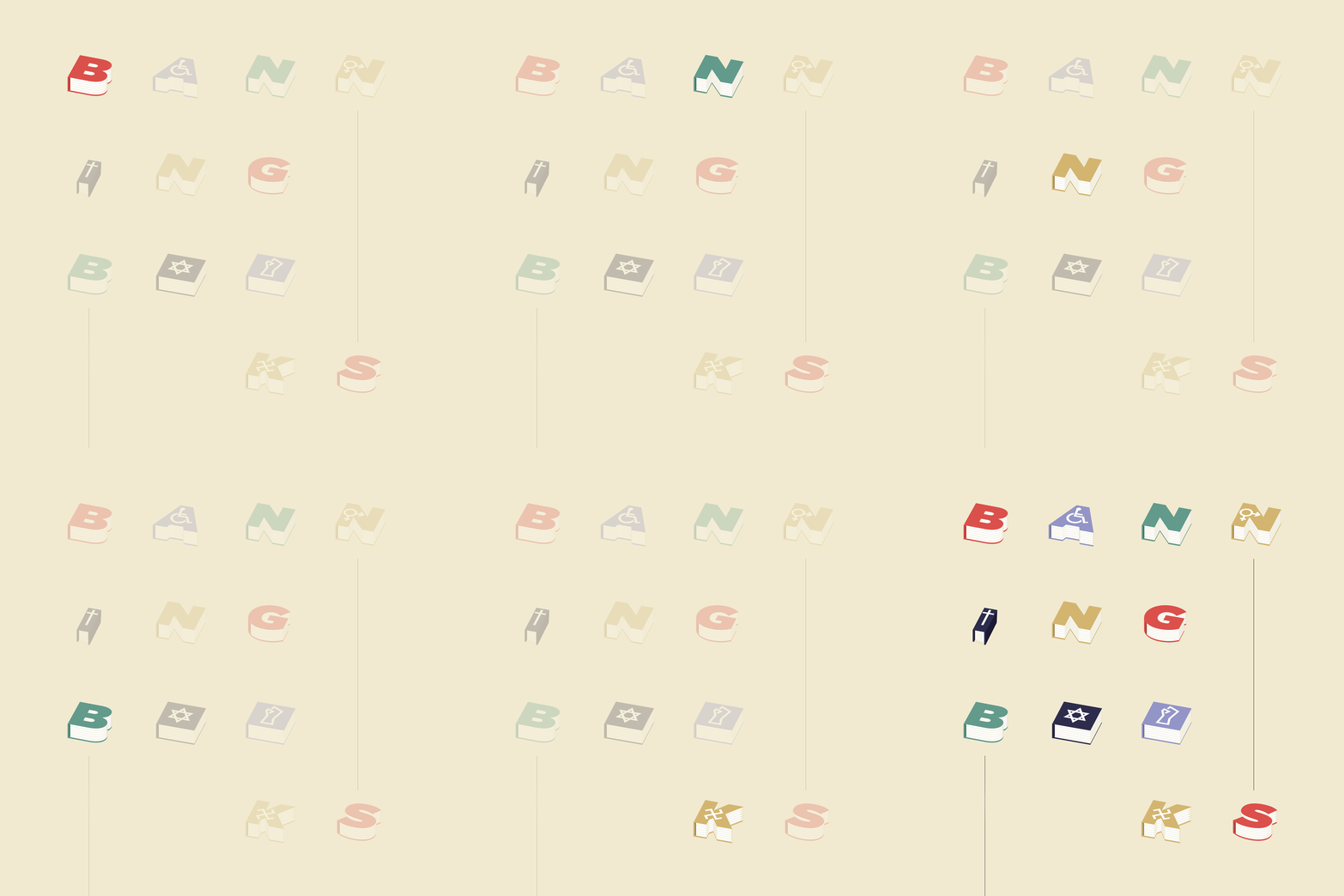
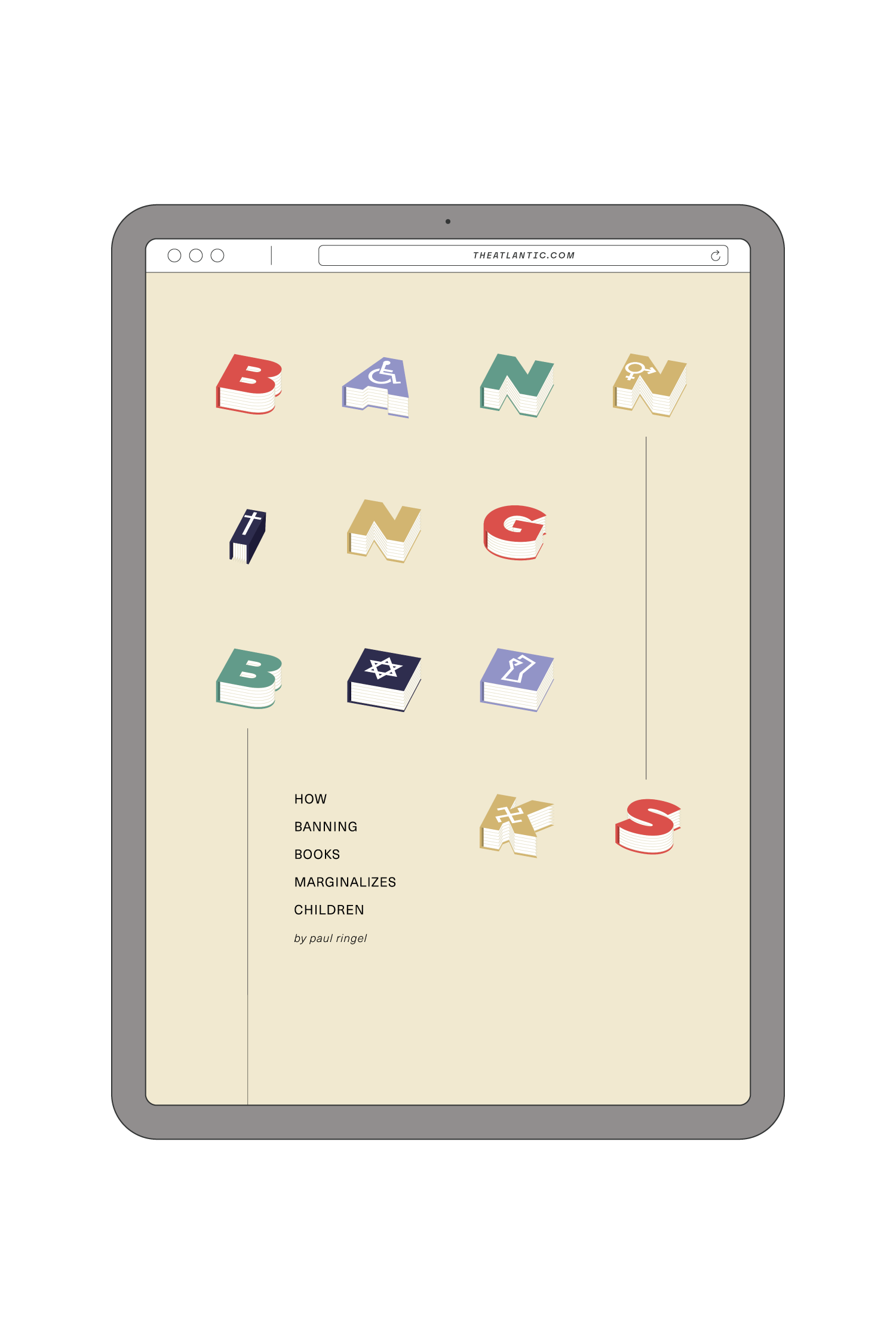
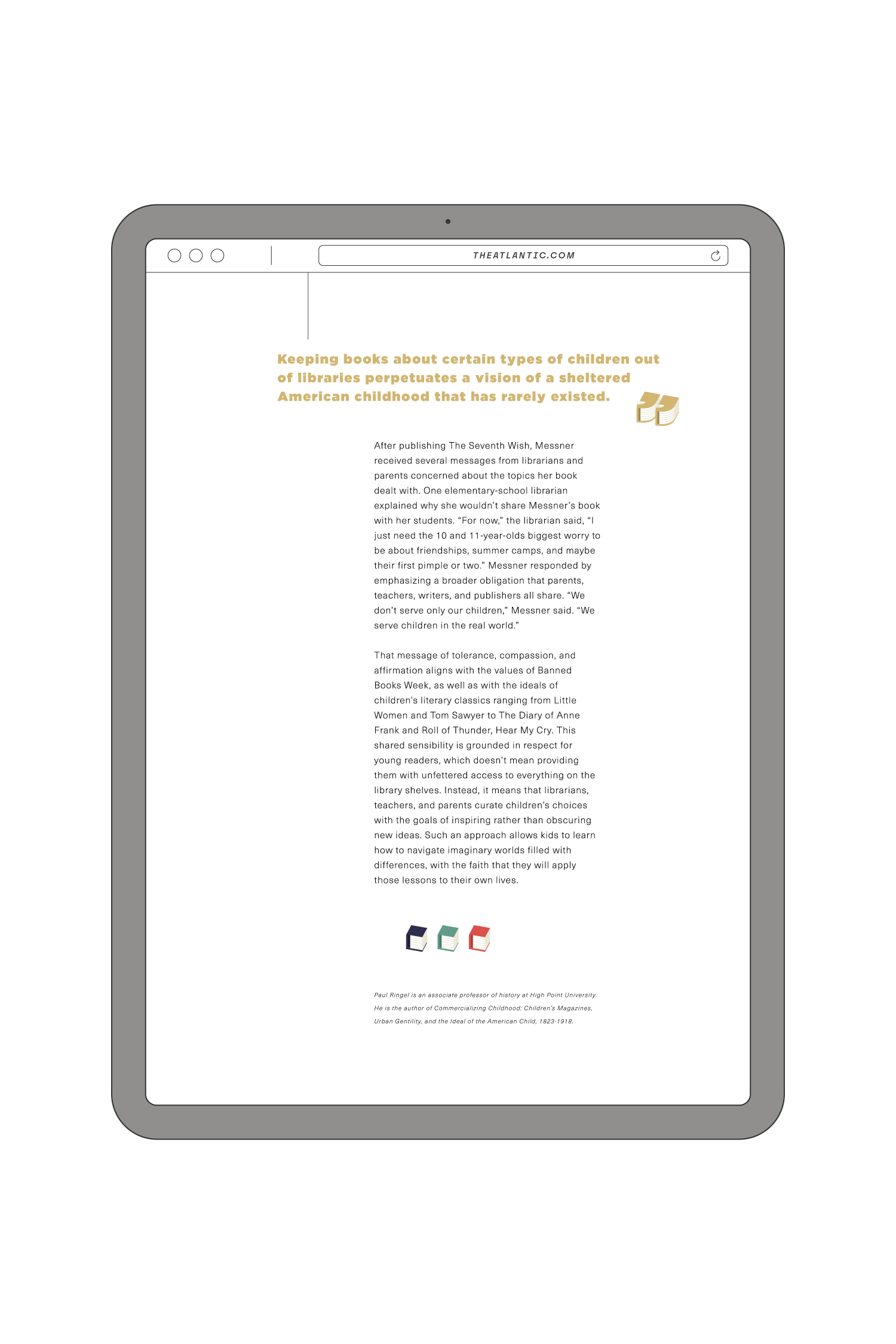
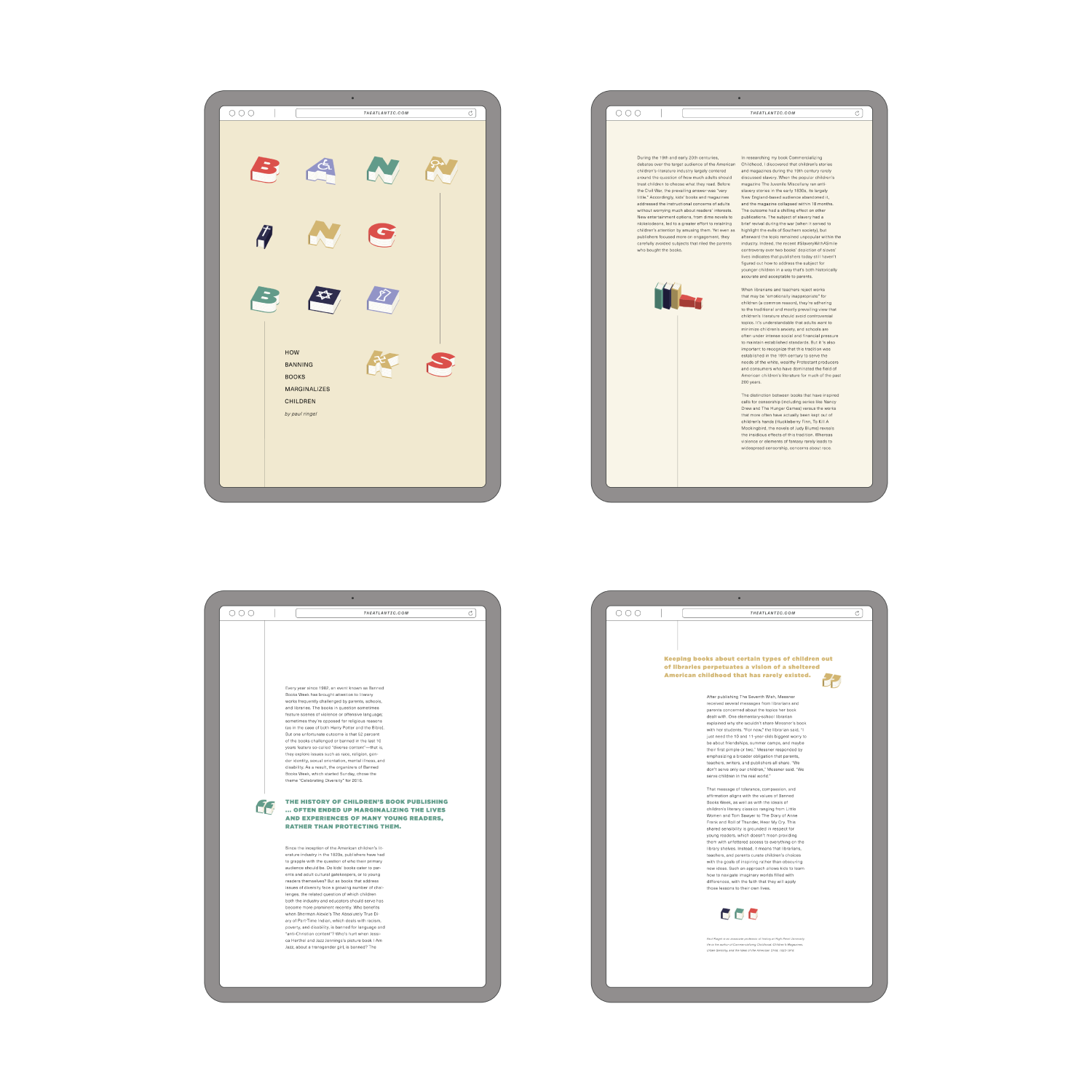
From a design perspective, the goal was to make the article more inviting and approachable while still honoring the seriousness of the subject matter. The layout features experimental typography and a flexible, digital format to draw the viewer in and support readability without sacrificing tone.
The iconography incorporated throughout the piece represents a handful of the many communities most often impacted by book bans—groups whose stories are frequently excluded, and whose voices are essential for fostering empathy and understanding. These icons serve as quiet but intentional reminders that representation matters, not just for those reflected on the page, but for every reader seeking to expand their worldview.
The original article "How Banning Books Marginalizes Children" can be viewed here.